Before you start investing in real estate, you might want to know the difference between a short sale and a foreclosure. Many investors, real estate agents, and even one-time buyers will look into these types of properties.
While they might seem interchangeable, these two terms are not the same thing. Let’s look at what both are and the differences between a short sale and a foreclosure.
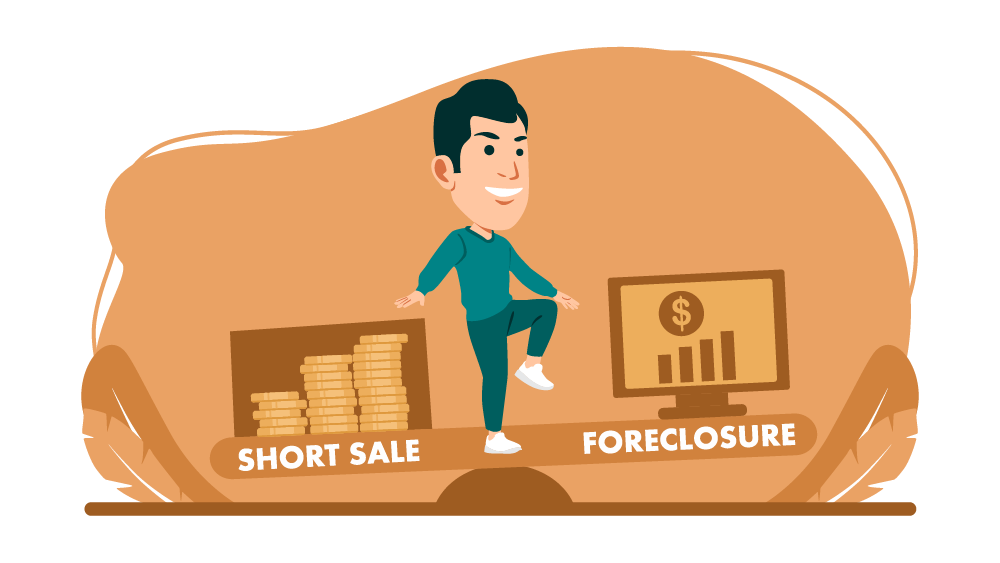
What is a Short Sale?
According to Realtor.com, “a short sale happens when a homeowner owes more on the mortgage balance than the market value or sale price of the property at the point the owner wants to sell.” The homeowner has to ask the lender to accept a lower amount than the mortgage owed for a short sale to happen.
When a short sale is approved by the lender, the borrower will be released fry liability once the sale closes. Typically, short sale properties are listed by a real estate agent that specializes in this type of property sale.
Sellers need to be aware of a term known as a deficiency judgment. Sometimes, mortgage lenders will try to recover the deficiency with a court order that will put a lien on the borrower. This isn’t allowed in some states, however.
Pros & Cons of a Short Sale
Pros
- Not Much Competition – If you’re trying to invest in a short sale property, you will likely find there isn’t much competition.
- Home Condition – Usually short sales are in better shape than other distressed properties.
- Cost – A short sale property often comes at a very good bargain with a lower than market value price.
Cons
- Time – When you buy a short sale property, it can take a lot of time to complete the transaction.
- Effort – You will also need to put in quite a bit of effort to buy this type of property.
- Risk – You will have more risk with a short sale because it will be sold as-is.
- Condition – While the condition of the property may be better than other distressed properties, it may not be as good as a regular home for sale.
What is a Foreclosure?
When a foreclosure happens, it’s due to a homeowner becoming delinquent on their mortgage. When they get too far behind on the payments, the lender will start foreclosure proceedings. Usually, this happens after the homeowner misses three to six months of payments.
A Notice of Default will be filed with the County Recorder’s Office. This notice tells the borrower they are at risk of foreclosure. The buyer can still settle the debt with the lender after this notice is filed. Often, they may try to do this through a short sale, at this point. Lenders call this pre-foreclosure, which will last anywhere from one to four months.
If an agreement cannot be reached between the lender and the homeowner, foreclosure proceedings will move forward. This will lead to a foreclosure auction, which will end with the home being sold to a third party. If the home is not bought at the auction, the lender will become the owner. When this happens, the property becomes bank-owned or real estate-owned (REO).
Pros & Cons of a Foreclosure
Pros
- Cost – The biggest benefit of buying a foreclosure is the price will be lower than the market value.
- Quick Sales Process – You will likely buy this type of property at an auction for cash, which makes the sales process very fast.
- Clean Home Title – When the bank forecloses on a property, it will clear the title of liens and encumbrances.
Cons
- Condition – Often, foreclosed properties are not in the best condition. The homeowner was going through financial troubles, so maintenance has likely been neglected.
- Preferred by Cash Buyers – It’s harder to buy a foreclosure if you don’t have cash on hand.
Short Sale vs Foreclosure: The Main Differences
There are several key differences between a short sale and a foreclosure. While both will involve homeowners that are in financial distress, there are plenty of differences. Let’s look at a few of the key differences between a short sale and a foreclosure.
Working with the Lender
When a homeowner forecloses on a property, they have not been able to work things out with the lender. A short sale is an agreement between the homeowner and the lender. When a short sale happens, the lender has agreed to let the property be sold for less than what is owed.
On the other hand, a foreclosure happens when the homeowner and the lender cannot reach an agreement. In many cases, the homeowners haven’t really tried to come to an agreement and just want out of the mortgage.
Recovery of the Loan
The way the lender will go about recovering the money owed is different between short sales and foreclosures. When a homeowner and lender agree to a short sale, once the property is sold, the loan agreement is fulfilled. However, with a foreclosure, the lender will sell the property at an auction and often file a judgment to recover the additional money owed.
This means if a homeowner owes $250K on their mortgage, but the property only sells for $180K at auction, the lender will still come after the additional $70K owed.
Time
A huge difference for investors between short sales and foreclosures is the time it takes to buy each. A short sale can take up to a year to close. If you choose to buy a foreclosed property, you will likely close rather fast, since it will be sold at an auction.
Impact on Credit
From the homeowner’s perspective, a short sale is less damaging to your credit score compared to a foreclosure. You can go through the short sale process and buy another house without waiting, in some cases. When you go through a foreclosure, it will remain on your credit for seven years. You will need to wait five years to buy another home.
Whether you’re the homeowner or you’re an investor, understanding the differences between a short sale and a foreclosure is important. These are two different types of properties and processes. Both offer opportunities for investors, but they are rather different.